QUBEai v1.4: Auto-Validation at Release Time
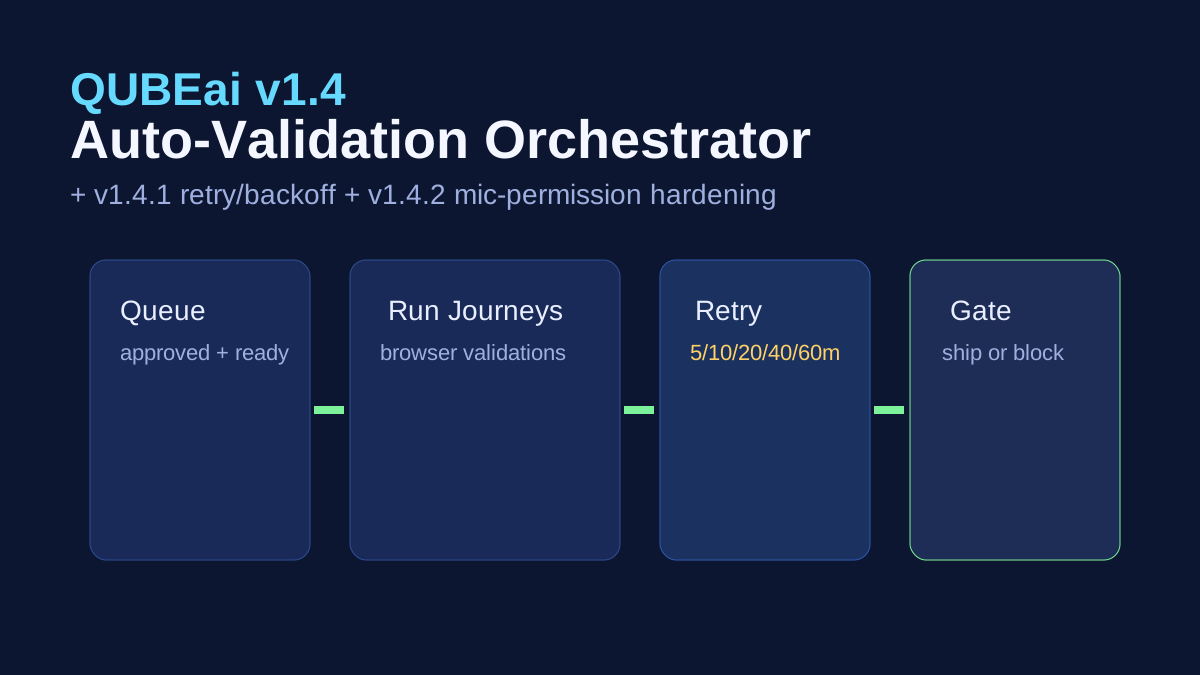
This phase turned validation into an automated release operation and added resilience for browser flakiness.
Changelog (What Was Added)
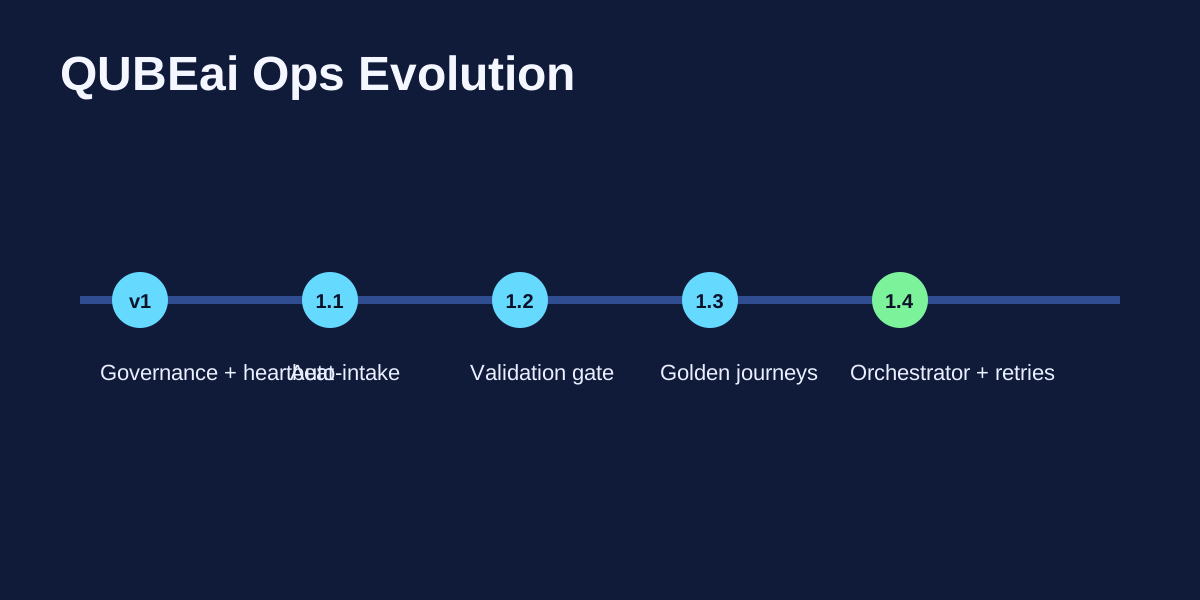
v1.4
- Auto-validation orchestrator that selects eligible release candidates and runs journey packs.
- First real IntecVeritas journey pack for mic + push-to-talk controls.
v1.4.1
- Transient/permanent failure classification.
- Retry/backoff policy (5m → 10m → 20m → 40m → 60m cap).
- Backoff-aware noise suppression so flaky runs don’t immediately become hard blocker spam.
v1.4.2 (IntecVeritas app)
- Mic permission hardening with explicit settings flow.
- Session-level mic stream reuse + idle cleanup.
- Clearer permission status UX for real users.
How You Leverage It
You can now operate validation as a system, not a manual ritual:
- Approve feature request.
- Move to release-ready state.
- Let orchestrator run browser journeys.
- Review only blocker/action summaries.
Time saved: fewer manual QA loops
Trust gain: repeatable pass/fail criteria
Use This Now
# Run orchestrator now
control-plane/qubeai-ops/scripts/qubeai_auto_validation_orchestrator.sh

# Review reports
control-plane/qubeai-ops/scripts/qubeai_validation_gate_report.sh
control-plane/qubeai-ops/scripts/qubeai_daily_queue_report.sh
IntecVeritas mic-permission flow
- Open IntecVeritas Settings.
- Use Grant microphone once.
- Confirm status shows Granted.
- Use voice features; repeated prompts should be reduced.
Pictures Included
Recommended Next Step
Start collecting a lightweight failure-corpus file (top transient vs permanent signatures) so v1.4.1 classification can be tuned with real-world data over time.